

RECEN – Refines How You Are Seen
September 23, 2026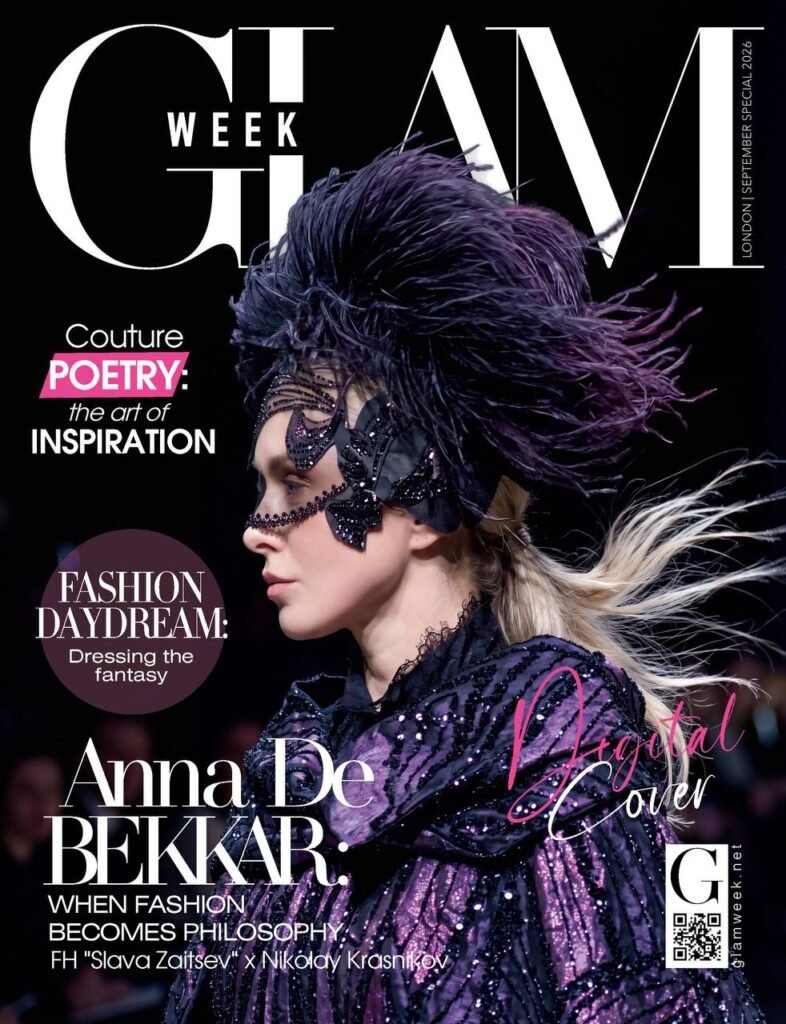
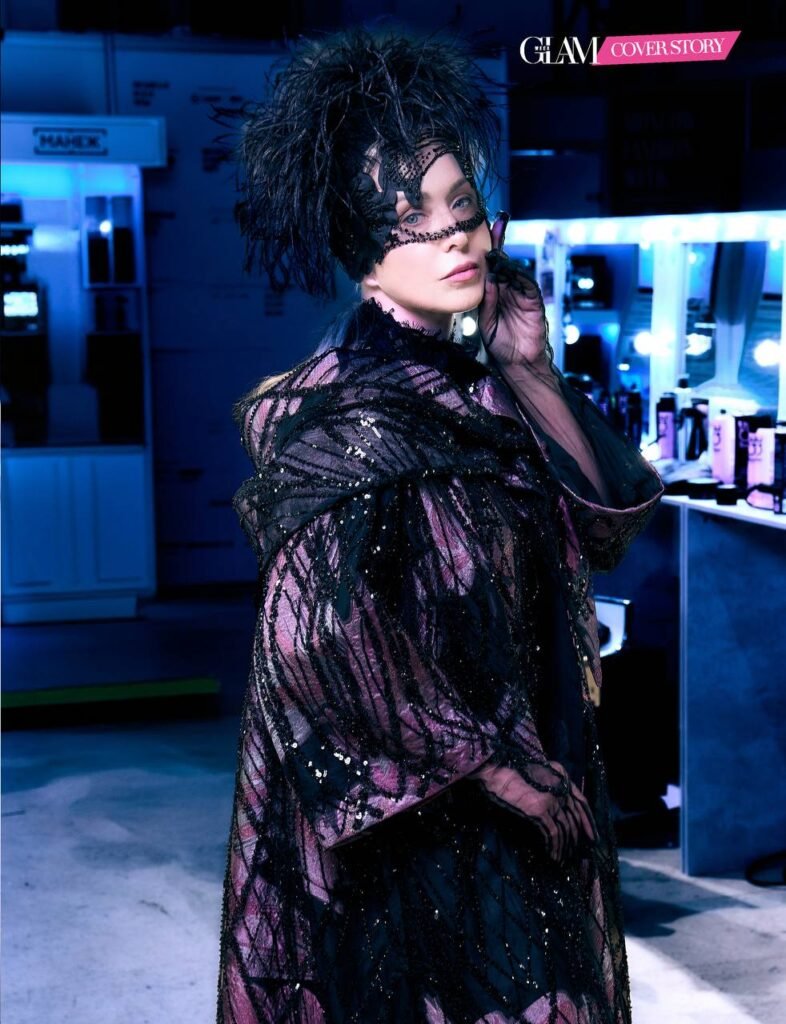
For Anna De Bekkar, Haute Couture is a world where beauty, philosophy, and artistic expression become inseparable. With a profound appreciation for fashion as an art form, she approaches the runway not simply as a model, but as an interpreter of the designer’s vision, giving movement and emotion to creations that carry their own cultural meaning. Wearing a remarkable piece from Nikolay Krasnikov’s Dédicace au Créateur collection for the Slava Zaitsev Fashion House, Anna embodies the fascinating relationship between artistic heritage and contemporary couture. In this special GLAM Week feature, she shares her thoughtful reflections on the nature of creation, the significance of beauty, and the extraordinary ability of fashion to transform a fleeting moment into something timeless.
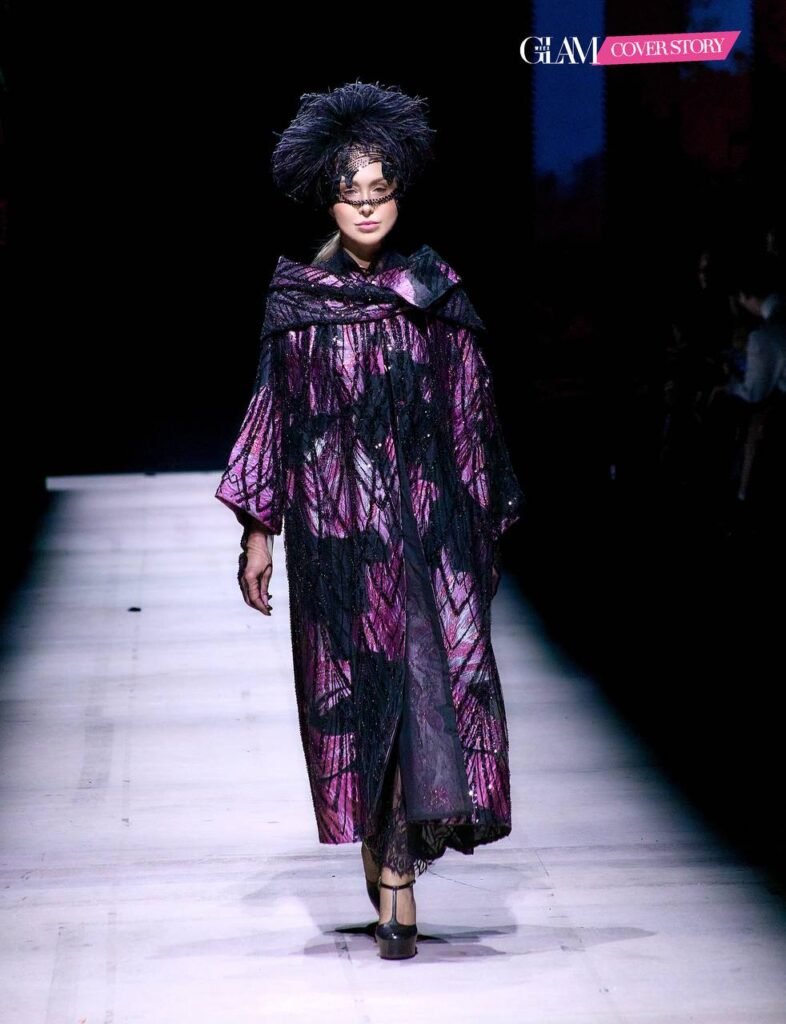
I would like to speak about Nikolay Krasnikov’s Haute Couture collection “Dédicace au Créateur.” If fashion could be asked a truly intimate question, I would have many: “What, for instance, is a person trying to say to the world when they put on a work of art? Who do we become at the precise moment when a garment ceases to be clothing and becomes an image, a symbol — almost an architecture of human presence?”
This is where fashion begins to touch philosophy. The look on the cover is one of the remarkable creations by Nikolay Krasnikov, Creative Director of the Slava Zaitsev Fashion House, from his Haute Couture collection “Dédicace au Créateur.” It can be seen not simply as an arrangement of silhouette, fabric, and ornament, but as an act of dedication. Even the title, “Dédicace au Créateur,” moves the conversation beyond appearance into something more metaphysical. Who, then, is the creator? The answer can remain deliberately open: God, nature, the source of beauty, or human genius. Or perhaps that invisible impulse through which matter suddenly acquires form.
I have always thought of fashion as an act of world-making. Every great couturier is, in a sense, a demiurge. Before the creative act, there is only the potential of matter: fabric, line, colour, and volume. Then comes the idea, and suddenly matter begins to obey it. There is something profoundly ancient in this gesture. Plato searched for the ideal form beyond the visible world. The sculptor seeks it within stone, the architect discovers it in space, the composer finds it in sound, and the couturier finds it in fabric. This is why Haute Couture, at its highest expression, has never been merely about clothes; it is the transformation of matter into meaning.
And whenever we speak of fashion in the cultural universe shaped by the name of Slava Zaitsev, we inevitably speak of memory. The memory of a great fashion house is not simply an archive of silhouettes, iconic images, and theatrical gestures; it is a way of seeing. A philosophy in which a garment is never merely a thing to be worn, but a cultural image capable of existing beyond the body. Within such a tradition, a garment can almost become a character. It exists not only on the body but in the imagination. Past and future can meet within it; artistic heritage can encounter couture; architectural discipline can coexist with the extraordinary fragility of the human body.
This is why true heritage should never be confused with repetition. Tradition is not the act of looking backwards; it is the ability to ask the next generation a new question. “Dédicace” means dedication, and every dedication is, in some way, an act of memory. We dedicate something to someone who came before us: to someone we love, to someone whose influence shaped us, or perhaps to an invisible source of inspiration that can never be completely named. Seen in this light, “Dédicace au Créateur” becomes almost a philosophical statement.
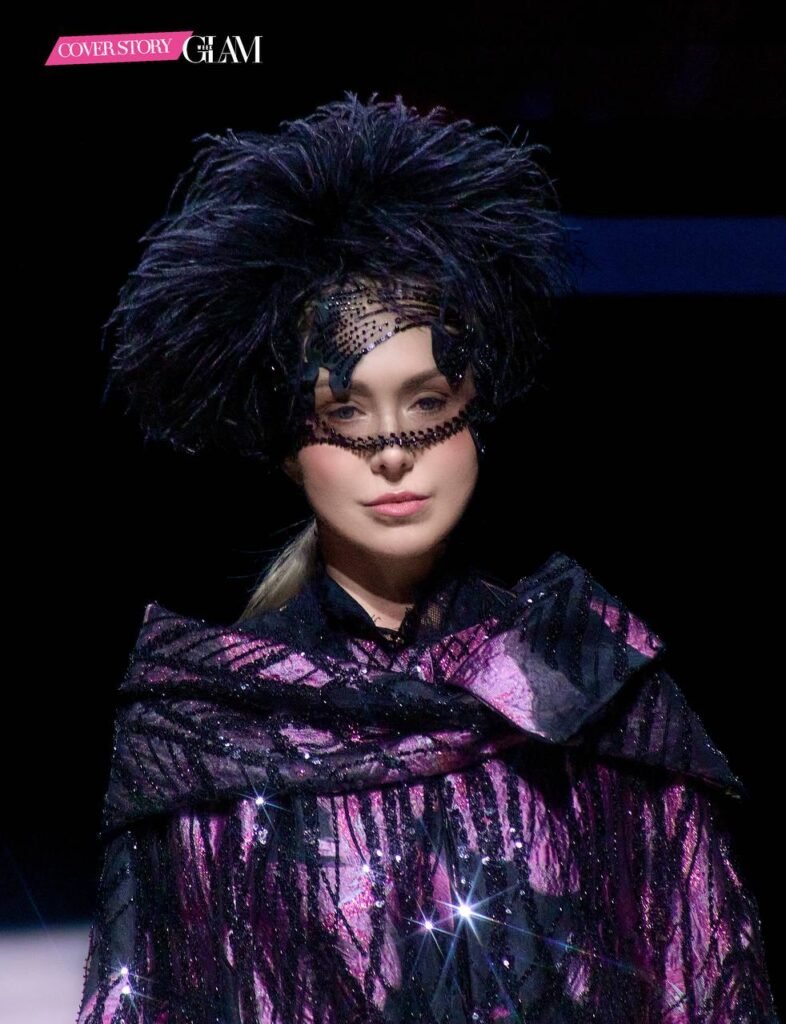
Beauty does not belong entirely to us; we merely become its vessels. This, perhaps, is the paradox of creation. The artist creates in order to affirm the self—and, at the same time, discovers that there is something greater than the self.
Whenever I step onto a runway, I feel that I am a human being inside a work of art. I am convinced that a model in Haute Couture is never merely the person wearing the garment. She is the space in which the designer’s idea begins to breathe. A runway show is, therefore, a theatre of human presence. The garment is no longer static. It moves. It responds to light. It enters into a dialogue with music, architecture, space—and, most importantly, with the gaze of the audience.
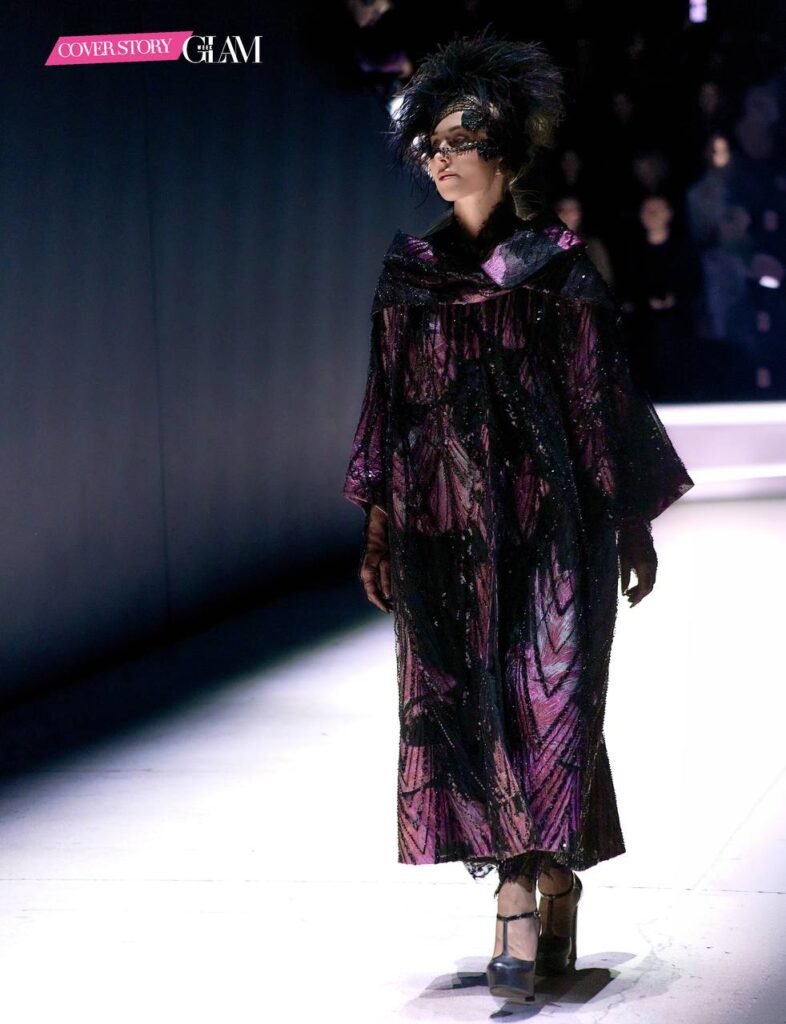
For the model, this becomes an act of interpretation. She does not simply present the work; she gives it a life of its own. For a few fleeting moments, the garment acquires an emotional biography — one that exists only in the encounter between creation and viewer. And here, perhaps, lies one of fashion’s most beautiful mysteries: where does the designer’s creation end, and the creation of the person wearing it begin? Perhaps there is no boundary.
Haute Couture has always maintained a profound and sometimes mysterious dialogue with the human body. It can reveal its lines or conceal them. It can exaggerate proportions, distort perspective, create new volumes, or transform a human figure into sculpture. Yet ultimately, clothing exists for the encounter with a human being. The body becomes a space for art.
And if “Dédicace au Créateur” is understood as a dedication to the ultimate source of beauty, then the person standing on the runway becomes a kind of temple for that beauty: not an idol, not an object, but a vessel.
There is also something deeply evocative in the silence and detachment of Haute Couture—something that speaks of exclusivity in a sense far more profound than rarity or privilege. Today, “exclusive” often means limited access, scarcity, or the possession of something unavailable to most. But couture offers another definition: exclusivity is the uniqueness of the moment. A show happens once. The light lasts for minutes. The music ends. The model disappears backstage. The audience returns to ordinary life. And what remains is memory.
Perhaps this is why Haute Couture is closer to art than to fashion in its conventional sense. A sculpture continues to inhabit space; couture, however, exists above all in human time. It cannot be completely preserved by a photograph. A photograph records an image, but not the entire experience. The true work is born somewhere between the garment, the body, movement, and the gaze of the person watching.
You currently hold the title of Miss New England. What has been the most meaningful part of your pageant journey so far?
The most meaningful part of my pageant journey has been seeing how much I’ve grown—not only as a titleholder, but as a woman, a mother, and a person. I’ve learned so much about growth and freedom, and through both motivation and challenges, I have become more resilient. My experiences are the brick and mortar of the mission I am building, and my journey has become a testament to never giving up.
Pageantry has also taught me the importance of authenticity—being true to yourself, allowing your actions to reflect your values, and embracing both your strengths and your struggles. I believe the most impactful leaders aren’t the ones who appear perfect; they’re the ones who are genuine enough to make others feel seen, heard, and valued. I want to use my story to encourage other people to find that same confidence within themselves.
Wearing a crown is about so much more than glitz and glamour. It’s about showing up for your community, inspiring others, and using your voice for what matters. I was given the chance to rebuild my life, and now I want to use my voice to help others rebuild theirs. I want the people I meet to know that regardless of where they are starting from or what they have been through, they can prosper and succeed too.
And one of the most meaningful parts of this journey is sharing it with my children. I bring them with me to community events and fundraisers whenever I can because I want them to see service, ambition, dedication, strength, and perseverance in action. Being a mother while working toward your dreams isn’t a consolation prize—it is the prize. I want my children to know that it’s okay to go after their dreams, even when the path isn’t traditional.
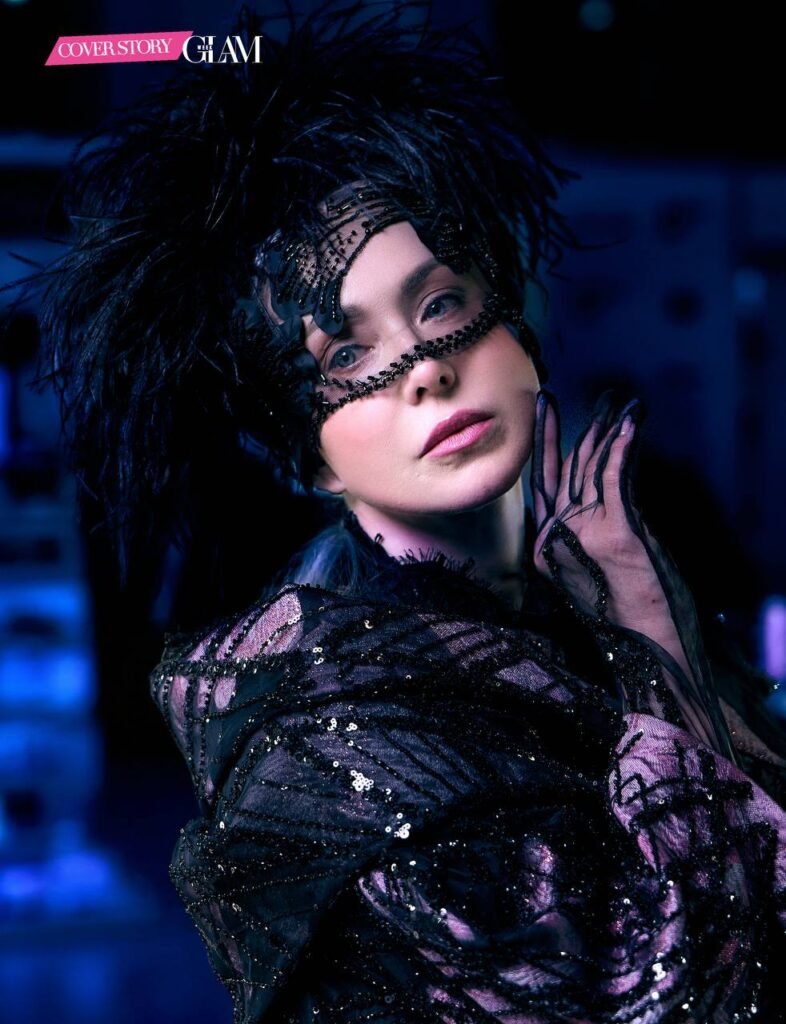
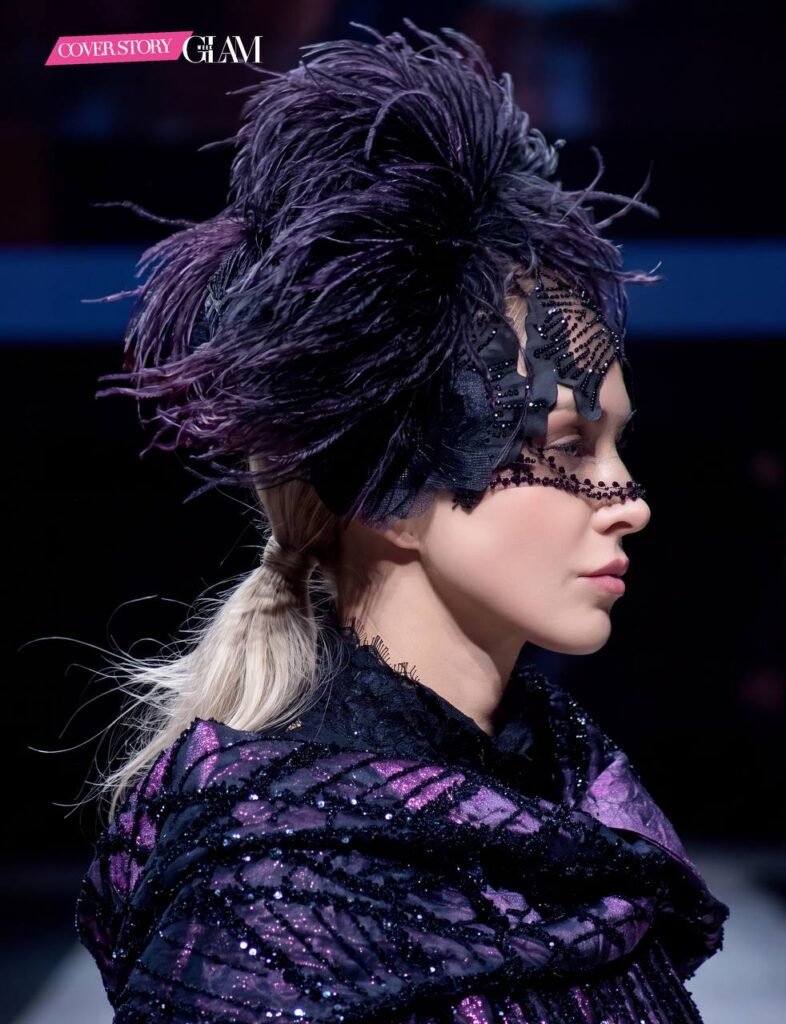
That may be why Dédicace au Créateur feels especially resonant now. We live in a world where beauty is increasingly filtered, accelerated, and transformed into an image almost before we have had time to experience it. Couture offers something else: hands, time, patience, and imagination. And, above all, respect for the mystery of creation.
A collection dedicated to the Creator speaks of much more than fashion; it speaks of gratitude. Gratitude to the material that allowed an idea to take form, to the artist who gave that form meaning, to the person who wears it and brings it to life, and to the viewer who is willing, even for a moment, to stop and look.
When the final look disappears from the runway, the show is over, but the work is not; it has entered memory. And this, perhaps, is the deepest power of haute couture: it creates not only clothing, but the memory of a person as they might become within the space of beauty.
“Dédicace au Créateur” is therefore more than the name of a collection; it is an acknowledgement, a quiet recognition that true beauty begins with the desire to reach beyond oneself. The model becomes an image, the designer becomes the author of a world, the garment becomes a language, and the runway becomes a stage for human presence. The viewer becomes a witness to the birth of a moment that can never be repeated.
Perhaps this is the true philosophy of couture: to create beauty is, for a fleeting moment, to touch the mystery of creation itself and to dedicate what we have created to something greater than ourselves.
International top model & photomodel: Anna De Bekkar @annadebekkar
Brand: Slava Zaitsev @slavazaitsew
Directors: Ekaterina Romashkina @rrrromawka, Ekaterina Panteleeva
@ekaterinapantel @zsmodels
Designer Haute Couture collection “Dédicace au Créateur” : Nikolay
Krasnikov @nikolaikrasnikov_stl
Headwear: Lia Gureeva Milliner @liagureeva
Production: Bekkarde_MediaGroup @bekkarde_mediagroup
Producer: Sergey Zhdanov @sergeymotion_ai
Releasing Producer: Anastasiia Storozh @anstaasiiaa
Muah : Masha Kudriavtseva @mari_kudri
Ph.: Dmitry Kamanin @dmitry.kamanin