

London Fashion Day Season 7 Brings Fashion Beyond Borders to Hyde Park
April 30, 2026
Oceania Renee: Stepping into the Los Angeles Spotlight
May 26, 2026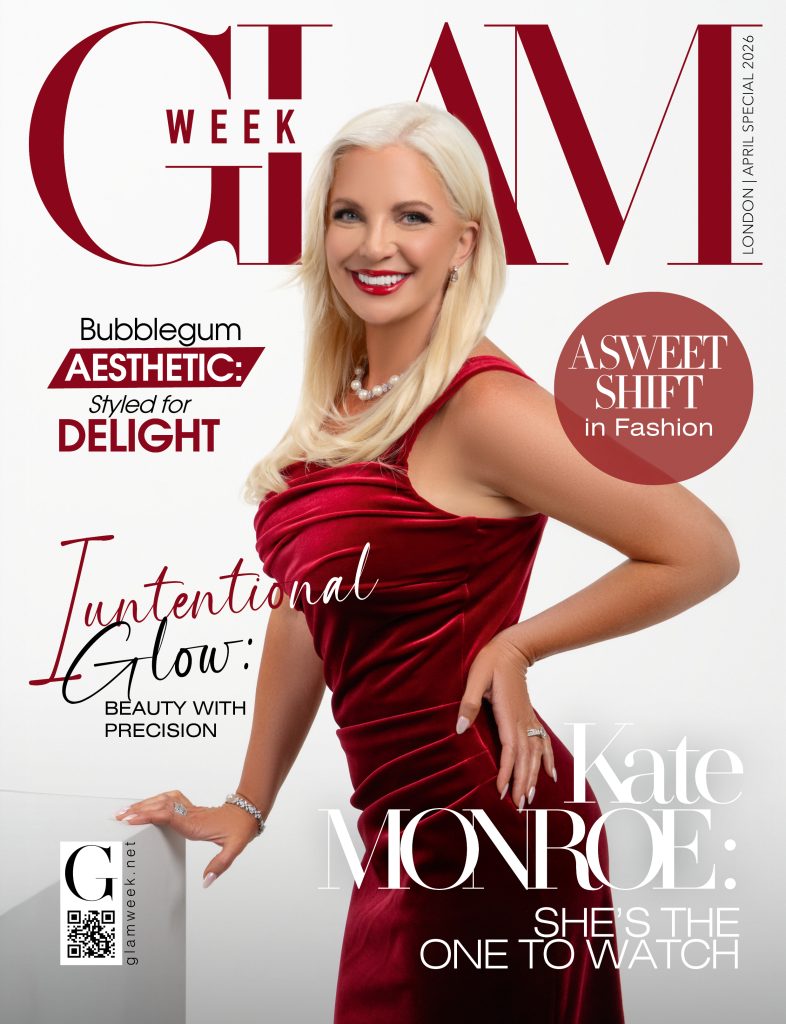
Kate Monroe — a name that sets its own terms. Actress, writer, and producer, she runs it as one—performance, authorship, and control in a single line. Bodyman begins with her own trajectory—politics, the military, direct encounters that don’t need embellishment—and reshapes it into a story built to be watched from more than one side. The Hales takes that discipline into crime drama, where tension is constructed with precision and nothing is left to chance.
Beyond the frame, she treats storytelling as both craft and system: something that has to engage, sustain, and scale. From long-form projects to vertical formats designed for new viewing habits, Kate approaches the industry with a clear understanding of pace, demand, and ownership.
Kate, as both an actress and one of the producers, how do you navigate the balance between being in front of the camera and shaping the vision behind it?
Some days I’m working in the business, doing the work of it, and some days I’m working on the business—so it’s kind of the same idea here.
When you’re acting, you’re in it. You’re focused on your performance—how am I relating to the other actors? But when you’re working on it, you’re thinking more broadly: how are they doing, how does the lighting look, does this sound right, do their mannerisms make sense?
For me, it’s a pretty easy bridge to cross because I’m used to that—being in the thing or on the thing. When I look at it through that lens, it’s much easier to process than treating it like something brand new, because it’s really not. You’re either in it or on it, and that’s just how business works.
Your series Bodyman marks an important milestone this year—what inspired you to create it, and what story were you most determined to tell?
In creating Bodyman, I originally wrote the books—and quite honestly, I didn’t know at the time that it would become a screenplay or a movie. I wrote it because I had run for Congress and had been on the news quite a bit as a political pundit, so a lot of Bodyman comes from my real life.
I really did go down to the border and face the cartel, and I was running against an incumbent on the other side. So a lot of it is drawn directly from my experiences. Obviously, it’s mixed with fiction, but I was also in the Marine Corps, so many of the military aspects come from that part of my background as well. While it is a fictional book and film, I would say more than half of it is rooted in real life—and I can see that very clearly.
The story I wanted to tell was one that both sides could watch—one where you can decide for yourself: where do I stand? Which side of the aisle am I on in relation to these issues? It’s meant to help people better process and rationalize what’s being discussed.
As you know, the border has been a number one issue for years on both sides. So telling that story in a fictional format allows people with different ideological backgrounds to sit in the same theater, watch the same story, and form their own opinions in real time. That doesn’t happen very often anymore, because most people are only consuming their own side of the news or rhetoric. Here, both perspectives are in the same film—and I think that’s what makes it exciting.
You are the creator, writer, and producer of your own projects. How has taking full creative control changed your approach to storytelling?
Taking full creative control is really just the next step in my journey. If you look at my business—whether it’s VetComm or my campaign—you’d see that I tend to do better when I’m in control. I don’t like to leave my success up to other people.
There are moments where I look at my companies, like VetComm, and think our success is in a lot of different hands—this team, that team—and I ask myself: what can I pull back in that’s fully mine? That’s often when I turn to something like writing a book or creating a project where I have complete ownership. It gives me balance.
I’d also say it’s less about control and more about command.
From traversing a donkey trail on foot in Santorini to visiting the tallest church in the world, the Basílica de la Sagrada Família in Barcelona, the exposure to new cultures and places has helped me be open to new ideas. Principally, I am always working to become the best version of myself, and T.N.T (Try New Things) Tuesdays allows me to inspire others to do the same.
People like to say, “you’re very controlling,” but it’s really that I’m in command of myself. I know what I want, I know where I’m going, and if you’re part of my vision, you’re going there too. I have the ability to lead people, keep them engaged, and see things through—because I’ve done it over and over again.
When you’ve had that kind of track record, you start to trust that when you’re in command, the outcome will follow—we’ll be successful, people will pay attention, and the project will deliver. At the end of the day, it’s another part of my business. Yes, it’s art—The Hales, Bodyman, writing, music—all of that is creative—but it’s also the entertainment side of my business.
For me, it’s actually easier having that level of control. It’s easier to write it, to stand behind the camera, to act in it—because if the outcome isn’t what I want, I’m accountable for it. I’d rather be responsible for that than be frustrated with a hundred people who didn’t deliver. I take the responsibility.
With The Hales, you step into a criminal drama as both writer and lead—what draws you to this genre, and what can audiences expect from your character?
Personally, when it comes to crime thrillers, I love a blend of fiction and reality—something like The Staircase, where a true story is told with a strong narrative style. I also love a good serial killer story or a political crime thriller, but overall, I tend to prefer fiction.
The Hales really comes from my lifelong love of crime thriller dramas. I grew up with a mom who watched all the best ones, and I developed an affinity for the genre early on. I’ve probably seen almost all of them—honestly, if there’s a great one I’ve missed, I want to know.
What drew me to it initially was that it felt separate from my real life—it was an escape. That said, I did go through a hostile takeover of my company a little over a year ago and spent a lot of time in court, so some of that may have fed into my interest in storytelling around that world. But at its core, The Hales is a crime thriller—a true whodunit.
For me, it’s exciting because I’m stepping into a space I used to only experience as a viewer. Now I get to ask: what’s the perfect recipe that keeps people on edge and guessing? I’ve poured years of watching, studying, and wanting to be part of something like this into the project. My hope is that audiences connect with it enough that it could grow into a full film or even a series.
You’ve also developed original vertical content for modern audiences. How do you see storytelling evolving with new formats and viewing habits?
I think if you look at the landscape in Hollywood right now, there’s a lot of disruption. Even in LA, which is supposed to be the heart of the industry, productions are having a harder time getting made. I have friends in the business who are struggling to shoot there, and that’s a real shift. For a city built on filmmaking, it feels like it’s moved away from that in some ways.
At the same time, COVID really changed audience behavior. It used to be that you went to the theater for movies and stayed home for TV, but during the pandemic everyone got used to watching everything at home. That shift stuck. Now, layered on top of that, you have social media and platforms like TikTok pushing content to be shorter and shorter.
That’s where vertical storytelling comes in. It’s a huge opportunity for creators like me who are willing to work in that format—but the demand is almost impossible to keep up with. If something like The Hales is 20 minutes long and someone binges it, they’re immediately asking for the next season. The appetite for content right now is insatiable.
I think it’s exciting because it opens the door for creators to make more and potentially earn more—especially if we start finding ways to let audiences, actors, and creators all participate in the success of a project. That could really expand the industry.
But it also raises questions.
At what pace can we realistically create all of this? At what cost? Do we start relying more on AI? How do you get enough people, ideas, and resources together to keep producing at that level?
So it’s a bit of a tension point right now. But I’m excited to step into that space, and I think what we’ve done with The Hales—creating something that feels like feature-quality in a shorter format—could very well become part of the new standard. There’s clearly an appetite for it, and that’s what makes it so exciting.
Cannes is just around the corner—how are you stepping into that moment, and what kind of energy are you bringing with you this year?
Going to Cannes is really exciting for me for a few different reasons. This is my first film—something rooted in my real life—and while I’ve had success in other arenas, like politics, business, and television, this is a new chapter. It’s the next big thing for me.
I’m also someone who really values memories. More than anything, this moment is about everything it took to get here—making the film, seeing it come to life, and now stepping onto that stage and those carpets alongside people who’ve been in this industry for years and saying, “I belong here too.”
And I’m going to show up fully. I’ll be in full regalia, I’ll walk the carpet, I’ll take the photos—I’m going to do everything I need to do to win. Because for me, this is about winning. And winning means: did I get attention on my project, on my business? Did I navigate a room full of people I don’t know and leave an impression? Will I be remembered?
We put so much emphasis on the “stars”—the handful of names everyone knows—but if you think about it, stars are something you rarely see. Even here in San Diego, you don’t see them every night. It has to be the right conditions.
Meanwhile, what you do see every day—the ocean, the sunlight, the trees—that’s constant, that’s real, and that matters just as much, if not more.
I think the industry is shifting in that direction. It’s not just about a few stars anymore—it’s about everything else that exists around them. And that’s where I see myself. That’s the space I’m stepping into.
So when I go to Cannes, yes, I’m there to make an impact and to win—but I’m also there to help carve out a path. To show that you don’t have to follow the traditional route to be part of this industry in a meaningful way. That’s the energy I’m bringing with me.
Looking ahead, what kind of stories are you most excited to bring to life—and what defines a project as truly meaningful to you today?
A project is meaningful to me if people enjoy it—and if it can be monetized. Because if people don’t enjoy it, they won’t watch it, and then you’ve made something that just sits on a shelf. And if you can’t monetize it, you can’t make the next one. So for me, it has to do both: it has to connect with a broad audience, and it has to sustain itself as a business.
I’ll be honest, I haven’t strayed too far outside the crime genre yet—I already have four more crime thrillers written. But I’m also working on a new project with a friend of mine, Erica Abarí, called Modern Day Marilyn.
The idea is really interesting to me. It’s not a traditional Marilyn Monroe story—it’s about her essence, her resonance. We look at someone like Marilyn and think: she was ahead of her time. She had that kind of presence, that aura, and the world wasn’t fully ready for it.
But if she existed today, what would that look like? Maybe she’d be running a multimillion-dollar company, maybe she’d be in politics, maybe she’d be a media force in a completely different way.
So the concept is: what happens when you take that kind of energy—that “it” factor—and place it in today’s world? That’s what excites me. I’m really drawn to stories about people who either have that intangible quality or don’t—and what that means in a modern context.
@katemonroeceo
Bodyman Credits:
Director: Michele Kanan
Evelyn James: Kate Monroe
Senator Whitaker: Sean Kanan
Dallas Rogers: John Schaech
Parker: David Chokachi
FBI Director: Lochlyn Munro
Javier Ortega: Emilio Rivera
DOC: Chris Forsburg
LU-Z: Paola Paulin
The Hales Credits:
Director: Mike Dolgin (Focus Media)
Alexandra Hale: Kate Monroe
Sebastian Hale: Eric Etebari
Prosecutor: Preston Hillier
Alexandra’s Defense: Angie DeGrazia
Detective Rowan: David Chokachi
Sebastian’s Mother: Elizabeth Gast
PR-Company: @burgerrockmedia